
1. What 'Hz' actually means in plain words
Before exploring spiritual tradition, it helps to begin with clear physics. Sound is a mechanical wave traveling through air, water or solid matter. When a string, a singing bowl or a speaker cone moves back and forth, it creates gentle waves of pressure that reach your eardrum.
The unit Hertz (Hz), named after the nineteenth-century physicist Heinrich Hertz, simply counts how many complete wave cycles happen in one second. A low bass note might vibrate 60 times a second (60 Hz); a higher chime might vibrate 1,000 times a second (1,000 Hz). When you see 432 Hz or 528 Hz on a session, there is nothing hidden in the label: it tells you the exact pitch of the foundational tone.
They are not background music. They are the same wisdom, speaking in a language the body understands before the mind does.
2. Why 432 Hz feels warm and unhurried
In most modern orchestras and digital recordings, instruments are tuned so that the note A above middle C vibrates at 440 Hz (standardized internationally in the twentieth century). When a musician tunes that same A slightly lower, to 432 Hz — a difference of 8 vibrations per second, or about a third of a semitone — the entire piece of music sits a touch lower and softer in register.
In the nineteenth century, the Italian composer Giuseppe Verdi advocated for a slightly lower tuning pitch (around 432 Hz in French and Italian discussions of diapason normal) because it placed less strain on singers' voices and gave ensembles a warmer, rounder timbre. In contemplative and meditation music today, listeners prize 432 Hz for that exact quality: a gentle, unhurried warmth that invites the breath to slow down.
Visual guide
From one circle to the Seed of Life, the Flower of Life and Metatron's Cube
3. Where 528 Hz fits in the solfeggio scale
While 432 Hz is a concert tuning reference for the note A, 528 Hz is a specific tone close to the note C5. In modern spiritual and meditative tradition, 528 Hz is the centerpiece of the solfeggio frequency set (396, 417, 528, 639, 741, 852 and 963 Hz).
Notice the arithmetic inside those numbers: if you add the digits of any frequency in the set — just as we do in Pythagorean numerology — every single one reduces to 3, 6 or 9 (for example, 4 + 3 + 2 = 9, and 5 + 2 + 8 = 15 → 1 + 5 = 6). In our twelve-portal cosmology, these eight guardian frequencies are paired with the twelve signs of the zodiac:
| Frequency | Digit root | Portals & zodiac signs | Guardian theme in tradition |
|---|---|---|---|
| 396 Hz | 3 + 9 + 6 = 18 → 9 | Portal 11 · Aquarius (Uriel) | New beginnings & grounding |
| 417 Hz | 4 + 1 + 7 = 12 → 3 | Portal 1 · Aries (Ariel) | Courage & fresh movement |
| 432 Hz | 4 + 3 + 2 = 9 | Portal 4 · Cancer (Jophiel) & Portal 10 · Capricorn (Sachiel) | Inner peace & abundance |
| 528 Hz | 5 + 2 + 8 = 15 → 6 | Portal 6 · Virgo (Raphael) | Vitality & renewal |
| 639 Hz | 6 + 3 + 9 = 18 → 9 | Portal 2 · Taurus, Portal 3 · Gemini, Portal 12 · Pisces | Connection, communication & relationships |
| 741 Hz | 7 + 4 + 1 = 12 → 3 | Portal 5 · Leo (Michael) | Protection & clarity |
| 852 Hz | 8 + 5 + 2 = 15 → 6 | Portal 7 · Libra (Raziel) & Portal 8 · Scorpio (Haniel) | Wisdom & transformation |
| 963 Hz | 9 + 6 + 3 = 18 → 9 | Portal 9 · Sagittarius (Raguel) | Evolution & spaciousness |
4. How our sessions are composed and how to listen
A pure sine-wave tone played alone for an hour can feel sharp to the ear. That is why every Alpha & Omega session is composed by a human musician who places the portal's guardian frequency softly and continuously in the foundation, then weaves nearly an hour of slow, beatless harmonic music (~60 BPM, in warm major tonalities) around it.
As the philosopher Boethius wrote around the year 500 CE in De institutione musica, the music we hear with our ears (musica instrumentalis) is an invitation to quiet the mind and remember the harmony within ourselves (musica humana) and the order of the sky above (musica mundana).
Try it today
A 3-step listening practice for 432 Hz and 528 Hz
Whether you are taking a midday pause or winding down before sleep, these three steps help you get the most from a session:
- Choose comfortable headphones and low volume. Keep the volume soft enough that the music feels like a gentle room around you rather than a loud performance.
- Match the tone to your intention. Choose 432 Hz (Cancer / Capricorn) when you want deep evening stillness and peace, or 528 Hz (Virgo) when you want bright, clear vitality during the day.
- Begin with the opening and stay to the close. Let Serena or Elijah welcome you in, take three slow breaths as the foundational tone settles, and allow the session to close at its own pace.
Guardian frequency session · 528 Hz · Transformation & Renewal
Experience a full 1-hour 528 Hz session on YouTube
Our sessions weave warm, slow harmonic pads over a continuous pure reference tone so your ears never tire. Listen on speakers or open headphones at a gentle volume.
Questions & answers
Frequently asked questions
Do I need special headphones to listen to 432 Hz or 528 Hz?
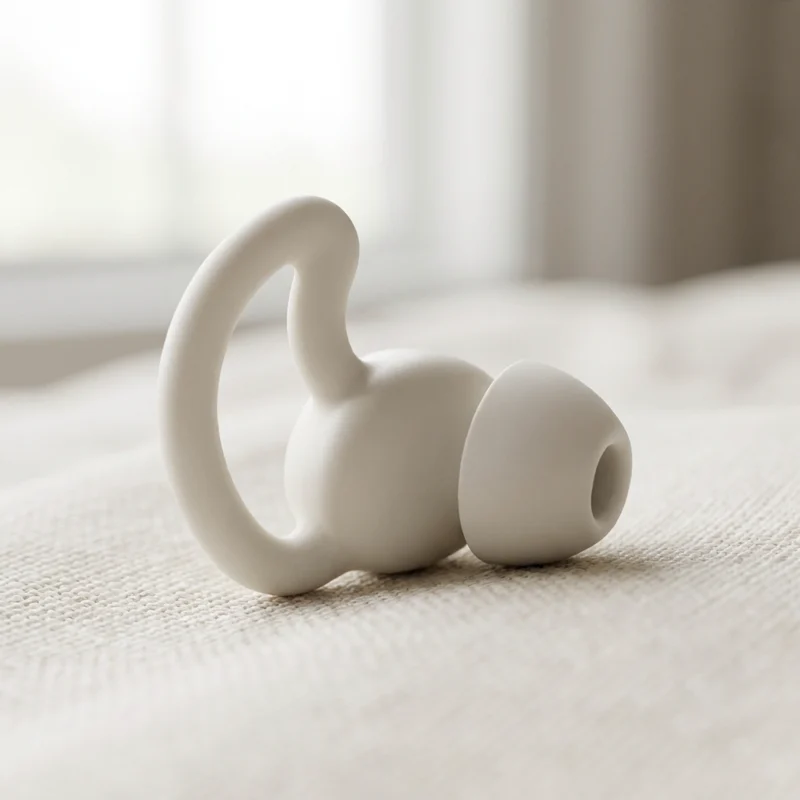
Any comfortable pair of headphones, sleep earbuds or a quiet speaker works well. If a track also includes gentle stereo layering, headphones give you the clearest sense of space.
What volume should I use for a frequency session?
Low to moderate volume is always best. The guardian frequency is mixed to sit softly beneath the music so your nervous system can relax without auditory fatigue.
Can I listen while falling asleep or working?
Yes. Many listeners play 432 Hz sessions as part of their bedtime routine, or keep 528 Hz and 639 Hz playing softly in the background while reading, studying or meditating.
Are Alpha & Omega sessions generated by AI or played by a musician?
Every piece of music on our channel is composed by a human musician over the exact guardian frequency. Serena and Elijah, who open and close the sessions, are original characters created with AI.
Where can I preview all eight guardian frequencies?
Right on our home page: scroll to the 'Eight guardian frequencies' player to listen to one-minute previews of 396, 417, 432, 528, 639, 741, 852 and 963 Hz and watch the cymatic sand pattern change for each tone.
Sources & traditions
- Boethius, De institutione musica (c. 500 CE), Book I, Chapter 2 — the three kinds of music: musica mundana, musica humana and musica instrumentalis.
- Johannes Kepler, Harmonices Mundi (1619) — mathematical proportions and harmonic intervals in planetary motion.
- Hazrat Inayat Khan, The Mysticism of Sound (1923) — contemplative tradition of sound, tone and inner stillness.
- Ernst Chladni (1787) & Hans Jenny, Cymatics (1967) — physical observation of acoustic frequencies organizing sand and water into geometric patterns.
 Elijah